jobs for the weekend – walk bare, reconnect, live a little

earthing-14
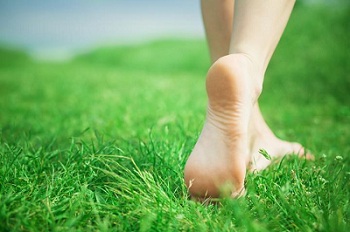
When we walk the earth barefoot, be it upon the sands of a beech, the soil of a field, a dew soaked grassy hill, the forest floor or just the everyday lawn in our very own garden a splendid magic happens – we connect with the earth – and it in turn, with every step, connects us to health and a natural realignment with the forces of life.

With each barefoot step, a multitude of free electrons from the earth’s magnetic field will travel through the soles of your feet into your body and energize your living self. But this is no tingle or buzz that you might get from a balloon or TV screen via static energy – there is nothing static here, no there is transformation, there is movement: The fact is that these earth-gifted negatively-charged free electrons are amongst the most potent antioxidants known to man, they can reduce inflammation, decrease pain perception, improve metabolism, alter the viscosity of blood and tone cardiac muscle, promote healthy sleep, pep up your sex life, even go a way to slow the signs of aging and delay the pathology of many chronic diseases.

Walking barefoot upon the earth synchronizes our internal biological clocks, harmonizes our hormonal cycles, and sustains and supports natural physiological rhythms, combined with the health giving properties of gardening – the sunshine benefits to circadian rhythms, the soil based bacteria that triggers serotonin release, the fresh air impact upon cellular rejuvenation and brain function perhaps right now it is time to slip off your shoes and cultivate some health.

Posted in Growing mindful | Tagged , , , | Leave a comment

sap those warts

Warts are a sign of a virus – the human papillomavirus (HPV) in fact – which causes the body to produce an excess of skin cells. The best way to tackle them is to attack the virus by boosting your immune system – diet, herbal teas and vitamin supplements will all help. Meantime look to the cosmetic and also health eradication of those warty excesses – which are always unsightly and always contagious – so not just from somebody to you and you to your loved ones and colleagues but from you to you – as scratching a wart and then rubbing your neck or any skin surface can move the virus-filled cells around like seeds – In fact common warts are often referred to as seed warts.

While most are mostly painless they are ugly and some can become uncomfortable and sore – especially on the fingers and thumbs fractioned by gardening chores. Much like botrytis on tomato plants they enter the system via cuts and nicks, often at moist sections of skin; so barefoot to work boots or bare hands to sweaty gloves provide the right incubation. Warts come in all shapes and sizes and different parts of the body are prone to different types of wart. Many warts will eventually resolve themselves, even without treatment, but it can take up to two years. That’s two years of ‘spreading potential’ so like a weed – once spotted best eradicated.

There are more than 100 strains of HPV including a strain considered a sexually transmitted infection. Conventionally they are all treated similarly – with first point treatment via a Gp or beautician generally being Cryotherapy (or ‘freezing’) using liquid nitrogen to destroy the wart and its blood vessels – blistering and pain accompanies the treatment, sometimes slight scaring too, but it is predominately a one visit treatment.

Sometimes rather than ‘frozen off’, the wart is ‘burned off’ by a chemical application, mostly by cantharidin which blisters and damages the skin beneath the wart as part of its process. Retinoid cream (derived from vitamin A) is often employed and can be quite effective at checking the growth of warts – Vitamin A disrupts the warts cellular development and can easily be sourced from capsule supplements as much as expensive creams or from home pressed pumpkin seed or apricot kernel oil – if home pressing puts you off – a mortar an pestle of nuts and seeds may yield an A-rich paste – then there is always good old sunflower oil. Eating vitamin a rich foods also boost immune function.

Warts can be stubborn and if any of the above don’t yield results then the conventional road can lead to Surgery (with a scalpel), surgical removal via Electric needling or via Laser surgery. Some practitioners offer Antigen shots often comprised of Candida (yes, of yeast infections fame) to prompt your immune system to attack the injected foreign bodies and thus the wart in the process. Home kits if not freezers are often chemical peels that remove the wart in layers and many employ salicylic acid to do the wart eradication.

The immunotherapy of the antigen shots is often considered a leap in treatment; less scaring, more natural etc but it stems for the ancient practice of Needling – you can notice in many warts little pinprick-like trace marks where the wart has taped into the skins blood vessels and somewhere in our evolution of consciousness (and ethnomedicine) that may have inspired primitive man to prick the wart many times with something sharp – with all the sympathetic magic of ‘like cures like’ – well in this instance it worked – by triggering an immune response, causing immune cells to cluster in the needled skin cells and attack the wart from within.

Other natural approaches to wart removal can include a homemade retinoid via a vitamin A capsule rubbed into the wart or by the gentle corrosion and cellular altering of Apple Cider Vinegar, lemon juice, pineapple juice, garlic or onion juice. The vitamin c content in some of those is also beneficial to recovery of skin after the wart has been eradicated and may even contribute to the destruction of the virus causing the wart. The best way to tackle warts is to tackle the virus so immunity boosting herbs on page 00 will help your system reboot and go on the attack, a lowered immune system or a fatigued person are more prone to warts – so some energy smoothies along with alternative or conventional treatments will treat the underlying cause too.

The duct tape method – here you cover the wart with a corn plaster size of duct tape for six days. Then, remove , wash or soak the wart in warm soapy soak for a few minutes before filing it down with a pumice stone or emery board or nail file, wash again and leave uncovered overnight before repeating the process – Until wart is eradicated (generally within 2-3weeks). There is no magic, covering the wart stops it spreading, restricts its growth, puts under stress etc, soaking and filing virus infected removes infected tissue and the whole thing together is a war of attrition on the wart.

Garden treatment: In the cannon of global ethnobotany both wild and garden grown Euphorbias (along with other members of the Spurge family) have been employed to burn off warts and other skin growths – via dabs of their caustic milky sap. Perhaps first chronicled by the Greek philosopher and natural historian Theophrastus in the 4th Century B.C. but a staple depilatory of published herbals from the 1500s on – where corrosive and rubefacient properties are called for. Similarly dandelion milk – the corroding milky sap was once traditionally applied 2-3 times daily until wart eradicated. There are of course gentle garden options – not least wrapped poultices and compresses of marigold flowers (both tagetes and calendula varieties) and also basil, comfrey and lavender leaf version – but with these its more that the moisture of the sap/foliage under the bandage wrap makes the wart more amiable to pumicing or other friction removal as with the duct tape method.

Many over the counter treatments echo the ancient usage of willow sap treatment , by employing salicylic acid in the ingredients. Salicylic acid was first extracted from willow treats and meadowsweet plants for commercial production and the synthesis of aspirin. Some in frugal circles still recommend taping a moist aspirin to a wart – and yes it works, slowly over several repeats, over several weeks but you could go back to the original and extract your own salicylic acid by blending some willow growing tips and foliage in a little water or witch-hazel extract and applying that twice daily until wart shrinks away to nothing- helped along by some pumicing post Salix soak. As warts can be transferred in sloughed off skin cells , get a dedicated wart pumice stone and clean it thoroughly between uses.

Posted in Gardeners Health | Tagged , | Leave a comment

WASP STING – the done thing

Wasps (including hornets, yellow jackets and other members of Vespula and Dolichovespula species that regularly visit gardens) have sabre-like stingers that smoothly puncture the skin, release and puncture again repeatedly, delivering a swift inoculation of venom with each sting and these guys can sting you several times in a matter of seconds.

The sting sites swell with venom and histamine reaction. Similar to hives or blisters, they are sore after the sting and become irritated and itchy. Once the sting venom is neutralised or after it is dealt with by the body’s healing mechanism the sting swellings normally dissipate over several hours to a day or so. even if not prone to anaphylaxis, some people swell considerably upon being stung by a wasp, so if stung on a ring finger remove any rings as a priority.

First response: RUN!!! not a joke, you may have disturbed a nest and one sting will not be the limit if you did. Once safely inside, cool the sting site(s) with tap water and then douse a bit of vinegar over it. There are no barbed stings to remove with wasps or its cousins but anti-histamines will slow your body’s inflammatory response and also help the venom dissipate. Utilize some frozen veg or ice in a tea towel wrap as Cold therapy will to numb the discomfort and also reduce swelling.

Garden aid: A crushed basil leaf compress or squeeze of its juice is remedial to sting venom and site swelling, as are the crushed the leaves of winter savory, calendula and plantain. Drink yarrow tea to counteract sensitizing by multiple stings. A mashed carrot compress is remedial.

Top tip: Wasp and hornet stings are accompanied by strongly alkaline venom. A ten minute soak in vinegar (acetic acid) will neutralise the venom – don’t waste time with baking sodas or other alkaline – keep them for bee stings. You can tape on a cotton pad or strip of gauze dipped in vinegar.

Posted in Gardeners Health | Tagged , , , | Leave a comment

want arcadia get ‘circadian’ gardening

grounded slide show (84b)In 2001 a new class of cells were discovered in the retina of the human eye, classified as ‘circadian’ rather than visual receptors. That discovery renewed research into the spectrum, intensity and duration of light that influences psychological and biological responses. But you don’t have to be a scientist to know shift work is murder or a bad night’s sleep wrecks you the next day.

So what it is – is – that part of the physiology of the human brain, functions on what is termed circadian rhythms – in essence that rhythm is a 24hr cycle with the ebb and flow of periods of alertness and drowsiness.. The neurochemicals that dictate when we are at our maximum capacity for concentration and action or when we are ready to hit the hay are modulated by external cues such as exposure to sunlight and also temperature. It is why we wake and work best in daytime and sleep most restfully at night.

The modern world with 24hr everything, with artificial lighting even in daylight is messing about with those cues and unfortunately out-of-phase circadian rhythm is quite a health hazard – contributing to instances of fatigue, insomnia, depression and tumoral diseases alongside cardiac disease, diabetes and even obesity – as we eat out of sync and supplement our systems with coffee and sugary snack to try and keep pace. There is a lot of research about night workers and cancer and the detrimental effects of florescent lights and poor quality daytime sleep.

Gardeners garden in daylight; we reset our circadian rhythms to natures clock every time we fetch the spade or watering can. Those few hours in the morning prime us for a day of action and the evening’s light sets us up to enter a phase of rest.

The science of it is that in the brain alpha waves boost energy and detla waves suppress energy and promote sleepiness. The blue wavelengths of daylight actually suppress the drowsing delta brainwaves and boost the alpha wavelengths, so exposure to real daylight promotes cognitive function and alertness and later restful regenerating sleep – remember that sleep is the body recharging but sleep is also the body at repair – on a cellular level. Sleep is anti-aging and restorative, sleep is part of our immune and defence mechanisms.

But there is more than energy in daylight there is vitamin d. Vitamin D, which has a role in bone and muscle strength is produced in the skin from exposure to sunlight. 15minutes of sun a day is enough for most to get their daily requirement without searching out fortified cereals and super milks. People with low levels of vit d are more prone to develop osteoporosis, heart disease, hypertension, chronic fatigue, inflammatory diseases and chronic pain, certain cancers, autoimmune diseases and depression.

So yes gardeners need to protect against sun damage but a healthy dose not only promotes a sense of well-being it generates it. eating tomatoes can boost the spf of our skin so most GIYers are getting some nutritional sunblock naturally. The vit d from sun will improve sleep, reduces inflammation, strengthen bones and muscle and elevate mood. There are many trials running currently on vitamin d as a therapy for post chemotherapy recovery and for seasonal affected disorder.

all in a bit of gardening does you the power of good.

I will be talking more on this at the giy gathering sunday along with a whole shower of other know it alls – http://www.giyinternational.org/pages/the_gathering_2013 and thousands of everyday experts – the GIY membership.

Posted in Growing mindful | Tagged , , , , | Leave a comment

The Sicilian sting thing – an offer you just can’t refuse.

I love functional food and this one hits the spot perfectly – the frozen dessert granita siciliana but with a twist – made with antihistamine herbal tea.

Traditional Sicilian granitas are made from sugar, water and citrus fruit or coffee/tea so the flavours of our garden grown range of herbal teas are not a million miles away.

It is a great treat for children traumatized by a summer sting but it soothes more than tears away. I am a big kid myself and one with a sweet tooth so I keep a granita on the go in a freezer for times I get a sting and the odd hot Sunday afternoons too.

Ingredients (per 2 cups of granita)

• 1 mug of strong herbal tea. I personally prefer a blend of Chamomile, Echinacea, Fennel – but you can mix and match any antihistamine herbs to suit your tastes – spice it up with some Ginger etc.
• 1 cup fruit juice – Pick one flavour to supplement/compliment the taste of the herbal teas – orange, lemon, lime, apple, or experiment with pineapple, blackcurrant, cranberry, guava, mango, papaya or even homemade cordial or elderberries lemonade – all rich in vitamin C and loaded with antihistamine action.
• ½ cup brown sugar
• A spoon of honey

Method:

1. Make a strong cup of herbal tea with boiling water – you can use fresh ingredients in a teapot or cafetiere or use store bought teabags in a mug. ‘Strong’ is just a long soak in boiling water to extract the most.
2. Make simple syrup by combining the hot tea, honey and sugar and stirring until sugar dissolves.
3. Add fruit juice – to boost vitamin c and begin the cooling. Stir and let sit a few minutes.
4. Prepare to freeze by pouring the mixture into a flat-bottomed dish. I like to dust with a little sprinkle of sugar grains to start the granulation.
5. Place in the freezer for 30 minutes.
6. After 30minutes, remove from freezer and thoroughly stir/rake the mixture with a fork. Then replace in freezer for a further 30 minutes.
7. For the best granita it is best to repeat the fork raking process every 30 minutes for 3 to 4 hours – the aim is to prevent water ice-crystals from forming and keep a consistency similar to sorbet.
8. After 3-4 hours you can serving the granita immediately or let it hold over for a further 24 hours. After that ice crystals will form and change the nature of it (but still good to savour).

that’s it – the next time a bee or wasp stings you have a thing for it… revenge best served cold……like your gonna wait.

Posted in Food fixes | Tagged , , , , | Leave a comment

Geranium, rose and chamomile soothing body wash

Geranium, rose and chamomile soothing body wash is suitable for irritated skin conditions, dermatitis, acne and as a low allergen wash.

Essential oil of Pot Geranium (pelargonium spp) reduces inflammation of skin and controls infection of wounds – infusions, flower essences and petal maceration also works well. Rose is both tonic and soothing to skin while Chamomile is great with all complexion types and it is gentle on seborrhoea and helps flush toxins from skin capillaries.

Ingredients:
• 2 litres distilled/spring water
• 2 bars of natural soap
• 2 cups of chamomile flowers
• 2 cups rose petals
• 1 cup geranium flowers and foliage
• 2 tablespoons vegetable glycerine

How to:
To a lidded pot add floral content and 1.5 litres of water. Bring to a boil and simmer for ½ hr. allow to cool fully. Strain away flowers (discard or utilize mixed with honey to produce a face mask or skin patch). Grate the soap into the infusion and bring to boil again – stirring the soap fakes until they fully dissolve, hand whisking is ok. Stir in glycerine – I like to give it a thorough handwhisk at this point for even distribution. If too thick and not right sort of goopy – you can slowly add the remainder of the water to improve consistency. Allow to cool (and any froth to settle) before decanting into containers. Will store for 1 year but it’s generally used within months if not weeks of making.

The supple and subtle supplement versions
If you are not allergic to essential oils then you can supplement the natural botanical ingredients with 10-15 drops of each of their essential oil counterparts for extra potency/aroma – add at final whisk stage.

If you have a favourite liquid soap or cannot find an unscented low allergen bar soap or are out of flowering season of the botanicals then simply add the essential oils of those botanicals to any off the shelf low allergenic liquid hand soap or body wash.

Posted in Herbal Remedy Recipes | Tagged , , , , , , | Leave a comment

A big sweet kiss of blissful chocolate cake

A big sweet kiss of blissful chocolate cake – Vegan style

Makes an 8-inch square tin for slicing or a single 9-inch round cake for gluttonizing.

Ingredients for the Cake
• 1 1/2 cups unbleached white flour
• 1/2 cup cacao or 1/3 cup drinking chocolate/ cocoa powder
• 1/3 cup grated or broken chocolate
• 1 cup brewed coffee or chicory substitute
• 3/4 cup almond butter or 1/2 cup vegetable oil
• 2 large cooked beetroot (definitely not pickled variety)
• 3 tablespoons honey
• 2 teaspoons of stevia or brown sugar
• 1 heaped teaspoon baking soda
• 1/2 teaspoon salt
• 2 tablespoons apple cider vinegar

Ingredients for the ganache topping:
• 300g good quality chocolate
• 300 ml double cream

Method cake:

• Preheat oven to 190°C / 375°F / Gas Mark 5
• Make a cup of coffee/chicory
• Puree the cooked beetroot – use a little coffee to get a start
• Sift all the dry ingredients into a large mixing bowl
• Add coffee and other wet ingredients (butter/oil, honey and puree etc) except for vinegar
• Mix all to a smooth-ish batter – the grated/chipped chocolate will be lumpy for now
• Next add the vinegar and provide a quick thorough stir. Expect pale swirls where the vinegar reacts with the baking soda in the mix – this is the body/rise to your cake – all good
• Lastly pour the batter into baking tin and bake for 25 minutes
• Once cooked through, you can set aside to cool and then glaze with ganache or You can serve warm with ganache as sauce.

Method ganache:

• Preheat a pot of water – to a boil – for bain-marie
• Break up chocolate
• To a bain-marie/ bowl add the chocolate fragments to melt over hot water
• Once melted – fold in the cream.
• Stir until smooth off the heat.
• Once smooth and cooling – pipe or spoon the ganache over your cake.

‘Gan’ in Irish means without and this panache topped ganache topped cake may just leave one without ache. so for the bruised, the genuinely sore, the sick and the heartbroken – enjoy!

Life is not life without the total emotional spectrum of life. It’s all wonderful.

.. and celebration or commiseration is neither without Cake. X

Posted in Food fixes | Leave a comment

sick of the heat – a prickly issue

Heat rash or prickly heat is such an annoyance – that red or pinkish rash occurring on areas of skin beneath clothing really slows down enjoyment of the sun let alone gardening activity. It generally develops on hot days when the sweat ducts become blocked and so swell and react in rash form. The rash is discomforting and often itchy or prickly. Quickly remedied by removing clothing and allowing the skin to air-dry. No – that’s not a line!!

More persistent rashing is traditionally treated with calamine lotion or a topical NSAID (non-steriodal anti-inflammatory) but you can alternately take a lukewarm (or cooler) bath with some baking soda & oatmeal added to alleviate the itch… Or make a dusting powder of equal parts baking soda & cornstarch or talcum powder to absorb the skin moisture causing the heat rash and balance the body’s natural pH and dissuade further reactions.

Heat rash indicates that it’s time to halt the gardening activities for the day and retire to the cool before further complications such as heat cramps or heat exhaustion being to blip the edge of the radar.

Heat rash can go as quick as it came or take several days to resolve. For more obstinate heat rashes a twice daily spritz of dilute vinegar acts as skin friendly NSAID.
Vinegar (acidic) and baking soda (alkaline) cancel each other out so don’t try and combine all treatments in one go.

Prickly heat vinegar spritz
The acetic acid in vinegar is principally a non-steriodal anti-inflammatory. White, malt and apple cider vinegar all have the same active principle so whatever is to hand in the larder.
How to: simply dilute 50/50 some vinegar and water and decant into a bottle sprayer. Spritz the area twice daily. Some people experience a slight sting upon contact but it soon dissipates and takes the itch with it.
Add some foliage of rosemary or lavender for extra cooling and further addressing of agitated skin (and to not smell like you are moonlighting in the local chipper), shake well before use. Will store in fridge (extra bonus of the chill factor) for up to two weeks.

Posted in Gardeners Health | Tagged , , , , , | Leave a comment

thirsty work and homemade Quick fix isotonic drinks

imagesCAW5URSI
Gardening is thirsty work, even just looking at it in summer heat is thirsty work.

Dehydration is what happens when your body loses more fluid than you take in. Which is an ever present threat when under the influence of gardening activities. Even on days not forecast as heat wave. You can perspire just as easily mowing the lawn or digging a bed over on a cool day as you can mid-July.

Dehydration is more than strong thirst, thought that is one of the presenting symptoms alongside tiredness, lightheadedness and dark, odourful urine. Dehydration is a disrupting of the body’s natural balance – Water makes up over two-thirds of a normal healthily functioning human body, it is intrinsic on a cellular level to all organs and their functions but when the natural water balance of the body is reduced it also disrupts the delicate balance of electrolyte salts (especially sodium and potassium) and blood sugars (glucose), which further disrupts functions including the capacity to thing clear.

If left untreated dehydration soon become severe dehydration and lead to seizures, brain damage and even death.

First response: drink plenty of fluids – water, diluted squash and fruit juice are all recommended but it is best to avoid fizzy drinks and caffeine. If symptoms persist or you manifest rapid heartbeat, strong fatigue, inability to pass urine after rehydrating or feel quite unwell then medical supervision is required

Isotonic drinks are designed to quickly replace the fluids which are lost by exertion and perspiration. They beat water by having a supply of carbohydrates/sugars to replenish energy. The trick is in the salt – as sodium is the electrolyte most readily lost in perspiration and also the salt makes the fluid more Isosmotic meaning that it brings the drink closer to the same concentration of solutes as the blood and so more readily absorbed into the bloodstream. Perfect to offset the physiological reactions to dehydration. But they don’t have to be store bought. I prefer mine to be homemade.

Juicy version – in a jug mix and stir the following
• 500ml fruit juice (whatever you have handy)
• 500ml still water
• A pinch of salt
• A pinch of sugar
• Ice – optional

Squish Squash version– in a jug mix and stir the following
• 200ml concentrate fruit squash (often high in glucose)
• 800ml still water
• A squeeze of some fresh lime, lemon or orange
• A pinch of salt
• Ice optional

Posted in Food fixes, Gardeners Health | Tagged , , , , , | 1 Comment

Avocado graze glaze

Functional food is for more than eating……….

For second degree abrasions and sundry grazes where inflammation occurs or for larger surface abrasions a poultice of pulped avocado flesh is sublime, the oil is so close to our skins natural oil that it has been utilized in ethnobotany as a skin nourishing treatment for centuries but its high content of skin and wound healing vitamins including potent quantities of e, a and c that topically applied make its regenerative powers so beneficial to cuts, scrapes, grazes and scratches

Ingredients
• 1 pitted avocado
• 1 blender or sturdy potato masher
• Optional – a few t-spoons of oatmeal

Method: Depending on ripeness, scoop and mash or slice and blitz to a paste consistence. The recommendation is to apply an avocado poultice or pulp paste to the affected site for three consecutive days. You can add oatmeal to thicken consistency if needed to hold plaster like to awkwardly positioned wounds, you can apply paste and bandage over. For most types of second degree abrasions and grazes a smear will suffice. Avocado pulp-paste will hold in fridge for the best part of a week.

Note: The fruit pulp of avocado with its broad array of anti-inflammatory carotenoids validates its utilization to reduce the pain, irritation and inflammation associated with 2nd degree abrasions but it is known also to hasten the process of healing on all skin conditions and be used as a recovery treatment to other first aid treatments where skin requires some TLC (including scars, rashes and burns)… and its delicious too!!!

Posted in Food fixes, Herbal Remedy Recipes | Tagged , , , , | Leave a comment